




Keypoints:
- Zimbabwe says Huayou plans a lithium carbonate processing plant
- Project would deepen the country’s move into battery-grade production
- Development highlights China’s growing influence in Africa’s critical minerals sector
ZIMBABWE says Chinese mining group Huayou plans to build a lithium carbonate plant, a move that could push the country deeper into the global electric vehicle supply chain and accelerate its drive to process critical minerals domestically rather than export lower-value raw materials.
The proposed facility would convert locally mined lithium concentrate into lithium carbonate, a higher-value battery chemical used in electric vehicles and energy storage systems. While investment costs, production capacity and development timelines have not yet been disclosed publicly, the project would mark one of Zimbabwe’s most ambitious efforts to move further up the battery minerals value chain.
Zimbabwe’s Deputy Mines Minister Polite Kambamura said Huayou was planning the facility as part of the country’s broader efforts to expand local mineral processing and increase value addition within the mining sector. The announcement reflects Harare’s determination to retain more economic benefits from its growing lithium industry.
For Zimbabwe, the planned lithium carbonate plant represents more than a mining investment. It is part of a broader strategy to transform the country from a supplier of raw minerals into a producer of battery-grade materials. The project also highlights China’s growing influence in Africa’s critical minerals sector and raises important questions about industrialisation, technology transfer and the continent’s role in global supply chains.
Why lithium carbonate matters
Lithium carbonate is one of the most important chemicals used in the manufacture of rechargeable batteries that power electric vehicles, consumer electronics and large-scale energy storage systems.
Producing lithium carbonate domestically allows countries to capture substantially more value than exporting raw ore or lithium concentrate. It also represents a critical step towards developing more advanced battery materials industries.
Demand for lithium chemicals has risen sharply over the past decade as governments and manufacturers invest in electric mobility and renewable energy technologies. While lithium concentrate remains an important export product, battery-grade chemicals such as lithium carbonate occupy a more valuable position within the global supply chain.
For resource-rich African countries, the ability to process minerals locally is increasingly viewed as a pathway towards industrialisation rather than remaining dependent on commodity exports.
Zimbabwe is estimated to hold some of Africa’s largest hard-rock lithium reserves and has emerged as a strategic supplier of the metal as global demand continues to grow.
China deepens grip on battery minerals
The project also underlines China’s dominant position in Zimbabwe’s lithium industry.
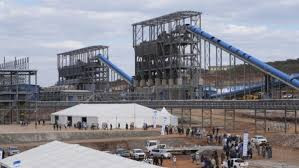
Huayou already operates the Arcadia lithium mine near Harare after acquiring the project for approximately $422m in 2021. The company has since invested heavily in downstream processing facilities as part of a wider strategy to secure battery mineral supplies.
Chinese companies now control or hold significant stakes in several major Zimbabwean lithium assets, making Beijing one of the most influential players in the country’s critical minerals sector.
China’s influence extends beyond Zimbabwe. Chinese companies play a dominant role across much of the global battery ecosystem, from mineral extraction and refining to battery cell manufacturing. That position has intensified competition among major economies seeking secure supplies of critical minerals required for future energy and industrial systems.
For Zimbabwe, Chinese investment has provided capital, infrastructure and processing expertise. However, policymakers continue to debate how to maximise technology transfer, local employment and domestic industrial development.
Africa races up the value chain
Zimbabwe is not alone in seeking greater value from its mineral resources.
Across the continent, governments are introducing policies designed to encourage local processing and manufacturing. The Democratic Republic of Congo has promoted battery value-chain initiatives linked to its cobalt resources, while Zambia is seeking to expand copper processing and Namibia has explored measures to boost value addition in critical minerals.
The common objective is to reduce reliance on exporting raw commodities and capture a larger share of revenues generated by the global energy transition.
As competition for strategic minerals intensifies, African governments are increasingly determined to avoid repeating historical patterns in which resources left the continent with limited domestic economic benefits.
Can beneficiation deliver jobs?
Supporters of beneficiation argue that local processing can create skilled employment, strengthen industrial capabilities and increase government revenues.
However, challenges remain.
Lithium processing requires substantial capital investment, reliable electricity supplies, specialised expertise and access to international markets. Global lithium prices have also experienced significant volatility in recent years, creating uncertainty for producers and investors.
Industry analysts note that long-term success will depend not only on processing facilities but also on whether countries can attract downstream industries such as battery component manufacturing and advanced materials production.
Economic stakes are rising
Zimbabwe’s lithium sector has expanded rapidly in recent years as international investors raced to secure supplies of minerals needed for the global energy transition. Government officials hope projects such as the proposed Huayou lithium carbonate facility will allow more of the value generated by the country’s mineral wealth to remain within Zimbabwe through processing, skills development and industrial growth.
The strategy reflects a broader shift across Africa, where resource-rich nations are increasingly seeking to convert mineral wealth into industrial capacity rather than relying solely on commodity exports.
Zimbabwe’s next industrial test
The proposed lithium carbonate plant signals that Zimbabwe’s ambitions extend beyond mining.
Instead, the country is positioning itself as a participant in the broader battery economy expected to expand alongside electric vehicles, renewable energy storage and global decarbonisation efforts.
Whether that strategy ultimately delivers large-scale industrialisation remains uncertain. Yet the proposed plant represents another signal that Zimbabwe intends to play a larger role in the industries underpinning the global energy transition, positioning itself not merely as a source of raw materials but as a participant in the production of higher-value battery chemicals.










