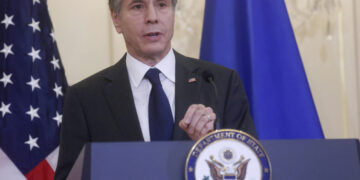






S Secretary of State Antony Blinken revealed on Wednesday the imposition of visa restrictions on individuals allegedly involved in ‘undermining democracy’ in Liberia in the lead-up to the country’s October elections. While Blinken’s statement did not disclose the number of affected individuals or their identities, the measure significantly limits their ability to travel to the United States.
In a statement released by the US State Department, Secretary Blinken emphasised that the policy was not directed at the Liberian government or its citizens. Instead, it targets individuals believed to be responsible for activities that jeopardize the democratic process in Liberia.
These US visa restrictions focus on individuals suspected of undermining democracy through various means, including electoral manipulation, rigging, the use of violence, or any other actions designed to improperly influence election outcomes. Blinken’s announcement aligns with the US government’s commitment to safeguarding democratic processes worldwide.
Last year, the United States imposed sanctions on three Liberian officials, citing allegations of corruption and misappropriation of state assets. Among those sanctioned was Nathaniel McGill, Liberia’s President George Weah’s chief of staff. The affected officials have consistently denied any wrongdoing. President Weah, a former football star, faces a significant test of his popularity in the October elections following a tumultuous first term. His initial election in 2017 brought high hopes of imp
roving the country, despite his lack of political experience. However, a series of scandals has posed cha
llenges to his administration.
Opposition leader Joseph Boakai officially launched his campaign earlier this month. Boakai, aged 78, finished second to Weah in the 2017 elections. The upcoming October elections will gauge the Liberian electorate’s sentiment toward President Weah and the political landscape.
The European Union said last month it will send an observation mission to Liberia ahead of the general election.
Liberia, established in 1822 as a resettlement place for freed slaves from the Americas, holds historical significance. The European Union recently announced its plans to deploy an observation mission to Liberia ahead of the upcoming general elections in October, demonstrating international interest in ensuring transparent and credible electoral processes in the West African nation.










