





Keypoints:
- Uganda approves $113m for 10 aircraft
- Fleet to grow from 6 to 16 planes
- Expansion targets regional aviation dominance
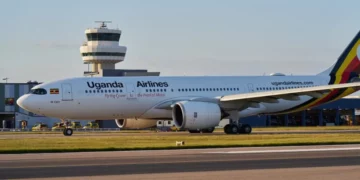
UGANDA has approved a $113m allocation to acquire 10 additional aircraft for its national carrier, Uganda Airlines, as part of a broader government strategy to scale up the country’s aviation sector.
The funding, included in Uganda’s approved supplementary budget, underscores renewed state backing for the airline’s long-term expansion plans.
Scaling ambition amid financial strain
The decision reflects Uganda’s push to build a competitive national carrier capable of driving trade, tourism and regional connectivity, even as Uganda Airlines continues to face financial losses and operational constraints.
Fleet set to more than double
Once the 10 new aircraft are delivered, Uganda Airlines’ fleet will expand from six to 16 planes, marking a significant leap in capacity since the airline resumed operations in 2019.
The additional aircraft are expected to increase flight frequencies, reduce operational disruptions and enable the launch of new routes across Africa, the Middle East and beyond.
This expansion is critical as the airline seeks to overcome persistent fleet limitations that have constrained its ability to meet growing passenger demand, particularly as regional air travel demand continues to rebound.
Budget signals broader economic strategy
According to Uganda’s government budget documents, the investment forms part of a wider effort to strengthen national infrastructure and enhance connectivity.
A stronger Uganda Airlines is central to Kampala’s ambition to position Entebbe as a regional aviation hub, supporting tourism growth and facilitating trade flows across the continent.
Uganda’s aviation ambitions are also tied to infrastructure expansion, including projects outlined in this agreement to develop a new international airport.
At the same time, upgrades to existing facilities are underway, as detailed in China-backed expansion of Entebbe airport, reinforcing the country’s hub strategy.
Financial pressures remain a key risk
Despite the expansion drive, Uganda Airlines continues to operate at a loss, with financial deficits widening in recent years.
Analysts warn that while fleet growth can unlock new revenue opportunities, it also brings higher operating costs, including maintenance, fuel and staffing.
Without stronger route profitability and cost management, the expansion risks increasing fiscal pressure on the government.
Leadership changes and restructuring
The investment comes alongside ongoing efforts to improve governance and operational efficiency at Uganda Airlines.
Authorities have initiated leadership changes and restructuring measures aimed at stabilising the airline and aligning its growth strategy with commercial viability.
These reforms are expected to address operational inefficiencies and strengthen oversight as the airline scales up.
Regional competition and strategic positioning
Uganda Airlines’ expansion comes amid intensifying competition in African aviation, where established carriers such as Ethiopian Airlines, Kenya Airways and RwandAir continue to dominate regional traffic.
The move aligns with broader continental trends, with governments increasingly investing in national carriers to capture a larger share of intra-African travel as passenger demand continues to recover across the aviation sector.
According to International Air Transport Association (IATA) data, African passenger demand has been steadily recovering, reinforcing the case for fleet expansion and improved regional connectivity.
By expanding its fleet, Uganda is seeking to reduce reliance on foreign carriers and assert greater control over its air connectivity — a strategic shift towards aviation sovereignty increasingly seen across the continent.
Outlook: balancing growth with sustainability
The $113m investment marks a decisive step in Uganda’s aviation strategy and could significantly enhance the country’s connectivity and economic positioning.
However, the long-term success of the plan will depend on Uganda Airlines’ ability to convert expanded capacity into sustainable revenue growth while maintaining operational discipline.
As Uganda doubles down on its national carrier, the coming years will determine whether expansion can be matched with financial resilience.










