





Keypoints:
- Leaders block opposition rivals in elections
- Growing youth protests challenge old regimes
- Foreign allies reduce pressure for reform
ACROSS parts of Africa, a familiar political script is being replayed. Leaders long past their political peak are finding inventive ways to secure re-election by sidelining, jailing, or disqualifying opponents. What were once democratic contests are now exercises in controlled legitimacy — and the result is an erosion of public trust that threatens to ignite deeper unrest across the continent.
A France24 analysis highlights how this growing pattern of exclusionary politics — from Tanzania to Cote d’Ivoire and Cameroon — is tightening the grip of incumbents and hollowing out Africa’s democratic institutions.
Stage-managed polls and vanishing rivals
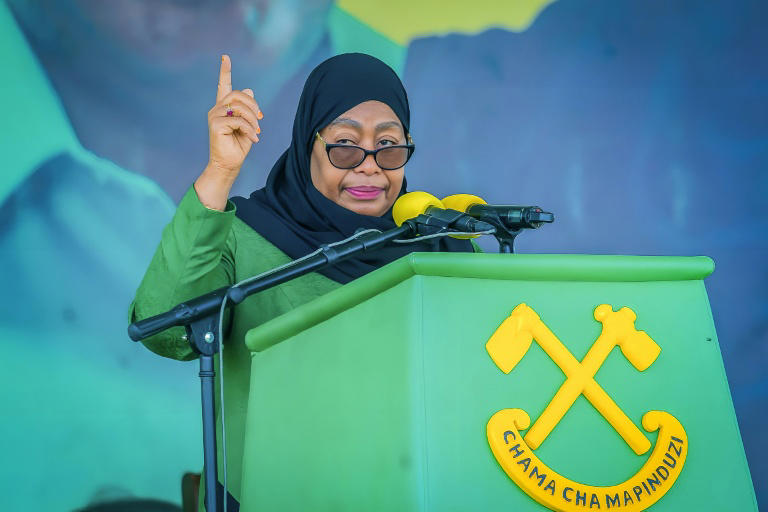
In Tanzania, the veneer of democratic competition cracked spectacularly when President Samia Suluhu Hassan faced virtually no real challenge at the ballot box. Her two serious rivals were either jailed or barred from standing, sparking protests that quickly descended into violence. The sense of betrayal among voters — many of them young — underscored the fatigue with what they see as elections designed to maintain the status quo.
In Cote d’Ivoire, President Alassane Ouattara secured a controversial fourth term with nearly 90 percent of the vote. His two main rivals were prevented from contesting — echoing a pattern that has recurred since he amended the constitution to extend his time in office. While Ouattara’s supporters hailed the victory as stability, critics called it a democratic regression that risks reigniting political divisions.
Further west, Cameroon’s 92-year-old President Paul Biya, the world’s oldest serving head of state, coasted to an eighth term this month. His strongest challenger was disqualified by the constitutional court, leaving voters little doubt about the outcome. Biya’s regime, in power since 1982, has repeatedly used the courts and electoral commission to control who appears on the ballot — a tactic that underscores what one Cameroonian political scientist, Stephane Akoa, described to France24 as ‘a perversion of the system’.

Eroding faith in democracy
Analysts say the resurgence of political manipulation represents a deeper malaise in African governance. Heritier Brilland Ndakpanga of the Centre for Humanitarian Dialogue calls it ‘a crisis of democratic governance on the continent’. Supposedly independent electoral bodies, he argues, have been weaponised to favour incumbents — and citizens are noticing.
In the Central African Republic, opposition groups are boycotting December’s elections over the alleged lack of independence of the electoral authority. In Tanzania, opposition leader Tundu Lissu remains jailed on treason charges for calling for reforms — a stark warning to anyone challenging entrenched power.
Even the democratic gains of 2024, when opposition parties triumphed in Ghana, Botswana, Mauritius and Senegal, appear to have had an unintended effect. According to Ndakpanga, those victories may have spurred other leaders to make sure they face no such risks at home.

The shifting global order
Behind the scenes, the decay of democratic norms is being driven by an evolving global power dynamic. Africa’s political and business elites — long shielded by patronage and control of state institutions — are increasingly anxious about a younger, more assertive generation demanding accountability, jobs and transparency.
The emergence of Gen Z-led protests in Kenya and Madagascar reflects this changing mood. In Madagascar, a youth uprising recently toppled the government and triggered a military takeover. In Kenya, demonstrations over economic hardship have been met with violent crackdowns.
‘People are becoming harder to control and creating more effective opposition movements,’ said Nic Cheeseman, a University of Birmingham expert on African elections, in comments to France24. ‘Governments are responding with the mechanism they’ve always used — repression.’
That repression is becoming easier to maintain as the external pressure for democratic reform wanes. China, Russia, Turkey and the United Arab Emirates have emerged as alternative partners, offering loans, infrastructure and military cooperation without demanding governance reforms.
‘African governments have alternatives in 2025,’ said Mandipa Ndlovu of Leiden University’s African Studies Centre. ‘Geopolitical competition is eroding the rule of law. Democracy is not a prerequisite for working with China or Russia.’
Meanwhile, the United States under President Donald Trump has adopted a more transactional diplomatic approach, reducing its traditional criticism of flawed elections and cutting aid to civil society organisations that promote democracy. ‘You’re not going to get pushback from the US anymore,’ Cheeseman added.
Youth pressure and the road ahead
This weakening of democratic oversight has created a volatile political climate. Tanzania’s eruption of election-day violence — once unthinkable in one of Africa’s most stable nations — revealed how fragile that calm really was.
For young Africans, many of whom have no memory of the independence struggles that gave rise to these long-serving leaders, democracy’s promise feels increasingly hollow. Yet, as Ndlovu told France24, ‘Gen Z will save us all. They are demanding that governments provide jobs and proper governance. But if we can’t fix the institutions, nothing will change.’
History offers both warning and hope. Kenya’s violent 2007–08 election crisis nearly tore the country apart, but it also forced constitutional reforms that have since improved electoral transparency. Cheeseman warns, however, that protests alone may not be enough to push elites towards change.
‘Populations are becoming increasingly demanding and governments increasingly repressive,’ he said. ‘That’s a dangerous combination.’
Unless credible institutions are rebuilt and elections regain legitimacy, Africa risks sliding into a cycle of coercion and revolt — where each ballot is less a celebration of democracy than a test of how long it can endure.










