





Keypoints:
- Ethiopian official says dam was funded domestically
- Trump claims US financed project ‘stupidly’
- GERD remains a diplomatic flashpoint with Egypt
AN Ethiopian official has firmly rejected claims by US President Donald Trump that the United States helped finance the Grand Ethiopian Renaissance Dam (GERD), calling the assertion both ‘false’ and ‘destructive’.
Speaking on Tuesday, Fikrte Tamir, deputy director of the GERD Coordination Office, stated unequivocally that ‘the dam was built without any foreign aid’, dismissing Trump’s recent remarks as misleading and diplomatically unhelpful.
Last week, President Trump told a rally audience that the controversial Nile River dam was constructed ‘largely with United States money’, repeating similar claims made in June on his Truth Social platform, where he called the funding effort ‘stupid’.
Dam of pride, point of contention
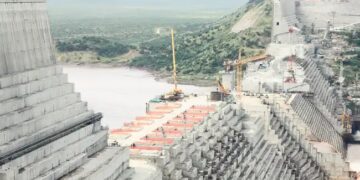
The Grand Ethiopian Renaissance Dam – Africa’s largest hydro-electric power project – has taken 14 years to complete and now stands as a powerful symbol of national pride. Sitting atop the Blue Nile in northern Ethiopia, GERD stretches over a mile and towers 145 metres high. It officially began generating electricity in 2022 and reached full operational capacity earlier this month.
Since its inception, Ethiopian officials have consistently maintained that the dam’s $4bn cost was covered through domestic means: government investment, public bond sales, salary deductions, and donations from the Ethiopian diaspora.
‘Regarding what Donald Trump claimed, the government should respond with far-sighted and carefully considered diplomatic procedures,’ said Fikrte, whose office was created by the government to spearhead fundraising efforts.
Although technically autonomous, the GERD Coordination Office has been central in engaging public participation. According to official data, over 1.7bn birr (around $12.3 million) was raised from the public in the 12 months leading to July 7 this year alone.
Water politics and regional tension
Despite the celebrations within Ethiopia, the project has triggered deep tensions with downstream nations Egypt and Sudan. Both countries fear the dam could drastically reduce the volume of Nile water flowing into their territories – a concern Trump has previously voiced in support of Egypt, a long-standing US ally.
In 2020, Trump controversially suggested that Egypt might ‘blow up’ the dam if a resolution was not reached, prompting outrage in Ethiopia. His renewed focus on GERD comes amid wider geopolitical posturing in the Horn of Africa, where access to freshwater and energy development remain flashpoints.
Ethiopia’s government has so far refrained from issuing an official response to Trump’s latest comments, a silence that has prompted some Ethiopians to question how much the GERD Coordination Office is privy to any confidential state-level negotiations.
Nonetheless, Fikrte’s statement is in line with a long-standing national narrative: that the GERD is not only a strategic energy asset but also a testament to Ethiopian sovereignty and self-reliance.
With nearly 60 percent of Ethiopians still lacking access to electricity, officials say the GERD is key to transforming the country’s economy – and they are determined to claim full ownership of the achievement.





