




Keypoints
- Deep internal rifts threaten Atiku’s alliance
- Regional divides weaken collective strength
- Public demands unity, not distractions
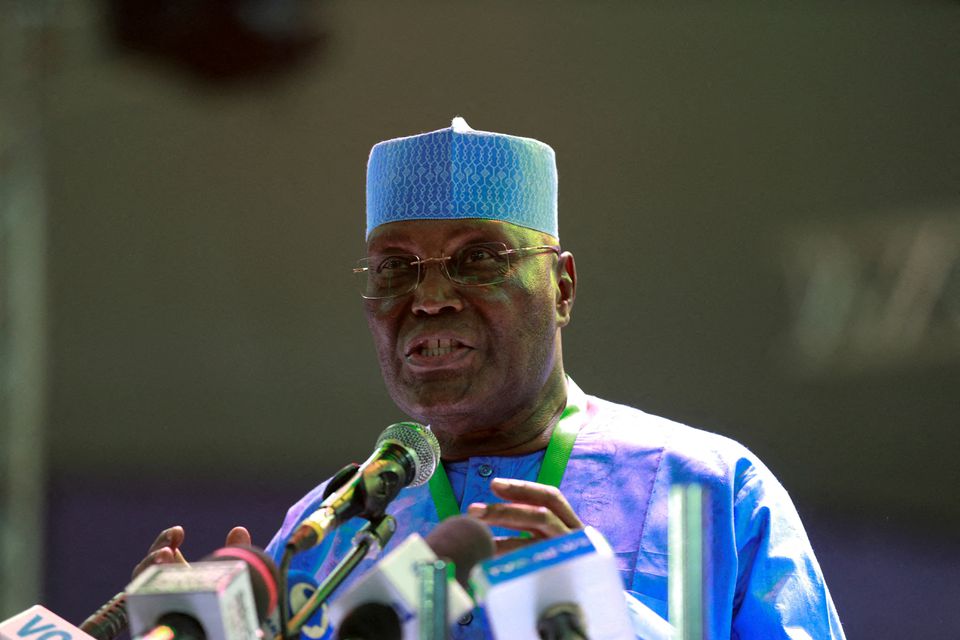
ATIKU Abubakar’s attempt to lead a super-coalition against President Bola Tinubu in the 2027 elections has drawn considerable attention. But behind the headlines lies a politically combustible alliance marred by mutual suspicion, jostling for control, and wavering public trust. Despite comprising powerhouses like the PDP, APC factions, and the Labour Party, the coalition has yet to project a unified front or articulate a compelling national vision.
Worse still, internal rifts—especially between Atiku and Labour Party leader Peter Obi—are causing tremors. Their battle over the presidential ticket has become emblematic of the alliance’s larger problem: ambition over unity. The South-South and South-East regions, once PDP strongholds, are drifting towards Obi, deepening the north-south divide and weakening the base that once propelled Atiku’s campaigns.
Trust deficit and public scepticism loom large
The cracks extend beyond rivalries. Trust issues, fuelled by scepticism over Atiku’s motives, have stifled momentum. Stakeholders question whether the coalition is a genuine force for change or a political stunt aimed at reclaiming power. Nigerians, increasingly educated and digitally savvy, are no longer swayed by slogans or empty alliances. They demand clarity, solutions, and integrity.
This growing public consciousness makes it difficult for Atiku’s coalition to rely on old-school political tactics. President Tinubu, aware of this, is deftly playing the game with what analysts have described as a ‘divide-and-rule’ strategy—fuelled by regional appointments, elite appeasement, and political tokenism. It’s working to splinter the fragile opposition, just as Tinubu’s inner circle intends.
But Nigerians are more attuned to the economic realities biting daily: inflation, joblessness, and insecurity. They want answers, not distraction. Coalitions without substance will not survive in today’s hyper-informed political space.
Coalition must embrace youth, unity and bold reform
The path forward is steep, but not impossible. Nigeria’s coalition politics, when rooted in shared vision, can be transformative. To course-correct, Atiku and his allies must start by crafting a unifying narrative. This means shifting from individual egos to collective purpose, with transparent mechanisms that build confidence and credibility.
Youth inclusion is non-negotiable. Over 60 percent of Nigeria’s population is under 30. They are the country’s engine—driven by technology, ideas, and reformist energy. Any coalition ignoring this demographic risks political irrelevance. By investing in youth-led policies around education, jobs, and digital innovation, the coalition could reframe itself as a true agent of change.
Then there’s the economy. Nigerians want growth—not handouts. The coalition needs bold, actionable plans: SME support, foreign investment incentives, regional trade initiatives, and sustainable development strategies that protect both livelihoods and the environment.
Distraction politics won’t work in a digital Nigeria
In an era where one tweet can shape national discourse, political distractions simply don’t stick. Digital natives are quick to scrutinise, fact-check and expose inconsistencies. For Atiku’s coalition to thrive, it must abandon the theatrics of old and embrace radical transparency and consistency.
Effective democratic development isn’t rocket science—it’s about responding to needs, not navigating outdated political chessboards. Nigeria needs fewer power grabs and more people-focused governance. Think Estonia’s digital government transformation, or Kenya’s growing tech hubs—models where good governance meets innovation.
Community engagement is another pillar. True political momentum is born at the grassroots. Coalitions that listen to communities, respond to their needs, and build trust from the bottom up tend to weather storms far better than those built in the boardrooms of Lagos and Abuja.
Learning from failure and charting a new course
Atiku Abubakar’s coalition is not doomed—yet. But it is on a perilous path. To change direction, it must confront its internal dysfunction, clearly define its priorities, and sincerely reconnect with the Nigerian people. Rebuilding trust will not be easy, but it’s essential.
Collaborative leadership, where vision transcends personalities, is urgently needed. It’s not enough to oppose Tinubu. The opposition must offer a better Nigeria—economically, socially, and politically. Only by fostering inclusive dialogue, tackling the youth unemployment crisis, and offering a clean, green economic strategy can Atiku’s camp hope to inspire.
Unity or irrelevance
The 2027 elections may seem far off, but in politics, time moves fast. Atiku’s coalition must use the intervening period wisely—not just to mobilise, but to mature. Without a compelling, credible, and inclusive platform, it risks being a footnote rather than a force.
In Nigeria’s rapidly evolving political terrain, coalitions that thrive are those that connect with everyday people, understand the digital shift, and present real solutions. If Atiku Abubakar truly wishes to rewrite his legacy, the coalition must urgently pivot from disarray to direction. Nigeria deserves nothing less.










